

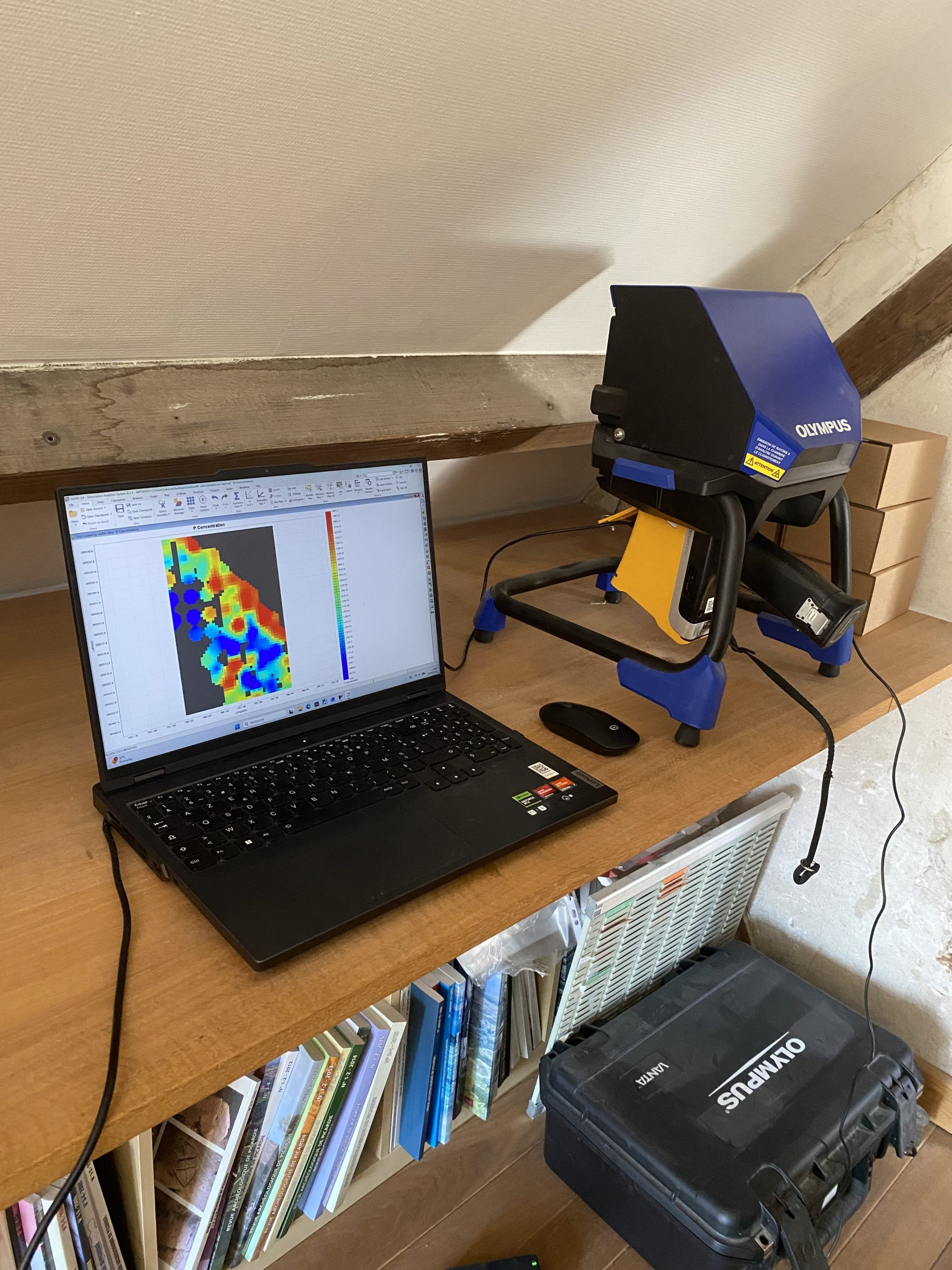
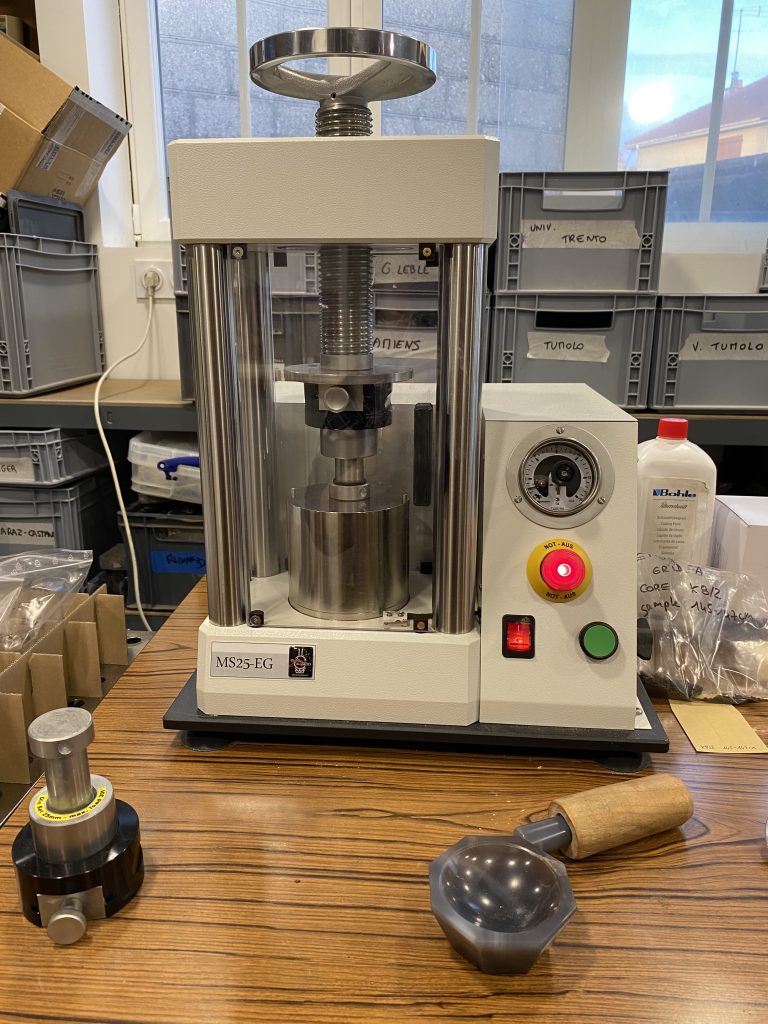
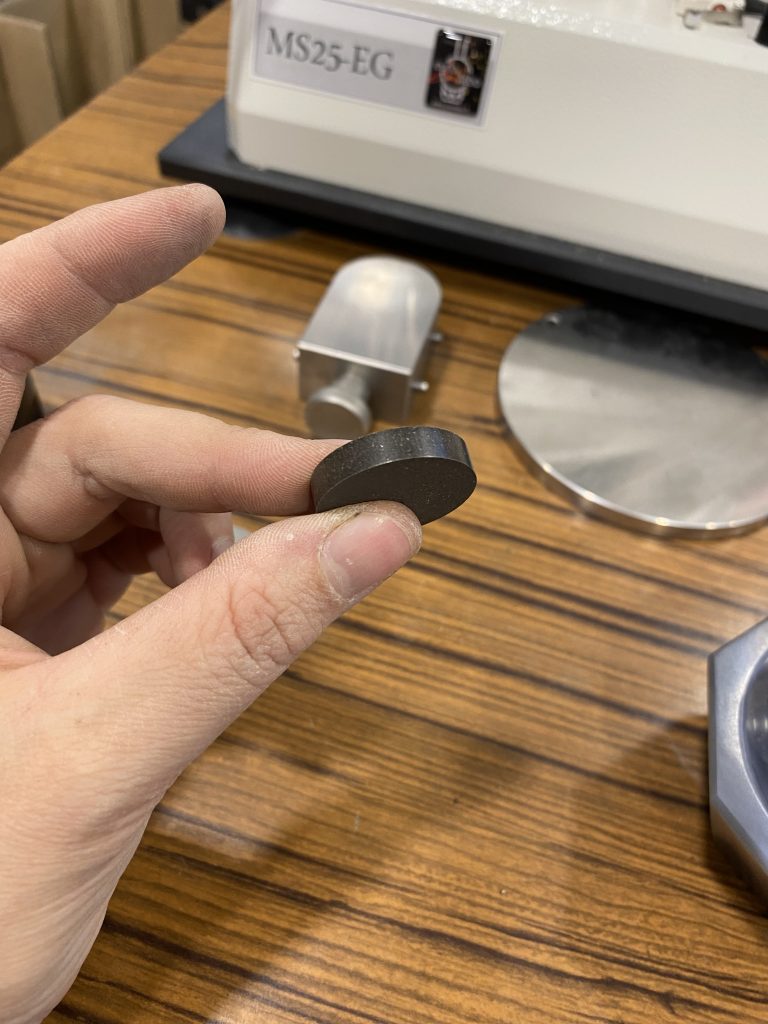
Terrascope is equipped with a Vanta serie M spectrometer and can provide pXRF analysis on sediment samples and micromorphology impregnated blocks. We can prepare your sediment samples in the state-of-the-art: drying the sediment in our heated ventilated cabinet, grinding it into powder in our agate mortar, sieving and removing >2mm particles, and pressing the sediment into tablets with our semi-automatic 25T press, ensuring the best data quality. We can also perform pXRF analysis directly on impregnated micromorphology blocks to support micromorphological observations with geochemical data (Holcomb & Karkanas 2019, https://doi.org/10.1002/gea.21741).
Sabrina Save is our expert in pXRF analysis, with over 50 site studies undertaken since 2011, on a large diversity of sites and archaeological contexts, in France and abroad. We can deploy pXRF on any scale, from a dozen samples to several thousands. XRF spectrometry can be used as a survey method, on profiles and cores, on archaeological surfaces, buildings, courtyards and wider areas, to investigate spatial organisation and space function. Numerous human activities can be characterised through pXRF data, and used in combination with micromorphology, these two methods are probably the most powerful tool available to archaeologists at the time to understand their sites.


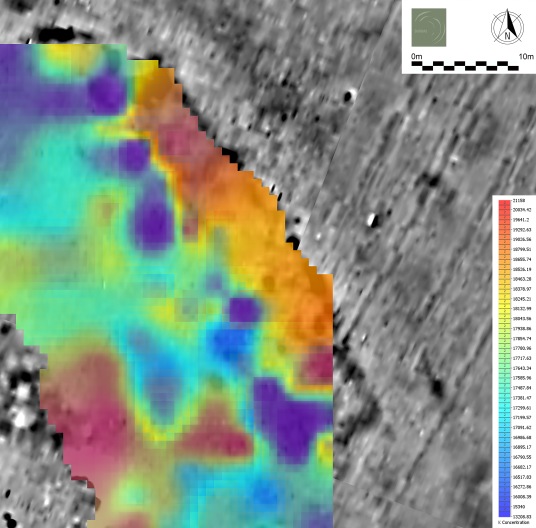
Terrascope can provide you with raw pXRF data (.csv table), or Sabrina Save can undertake the full analysis, including reporting and preparation for publication. We can produce basic statistics (PCA analysis) and edit beautiful graphs and maps with IoGAS, our software dedicated to the processing of geochemical data. In our reports, we will address all your research questions, and interpret and discuss the data to make the most out of it. If you want to discuss your project, please contact us!