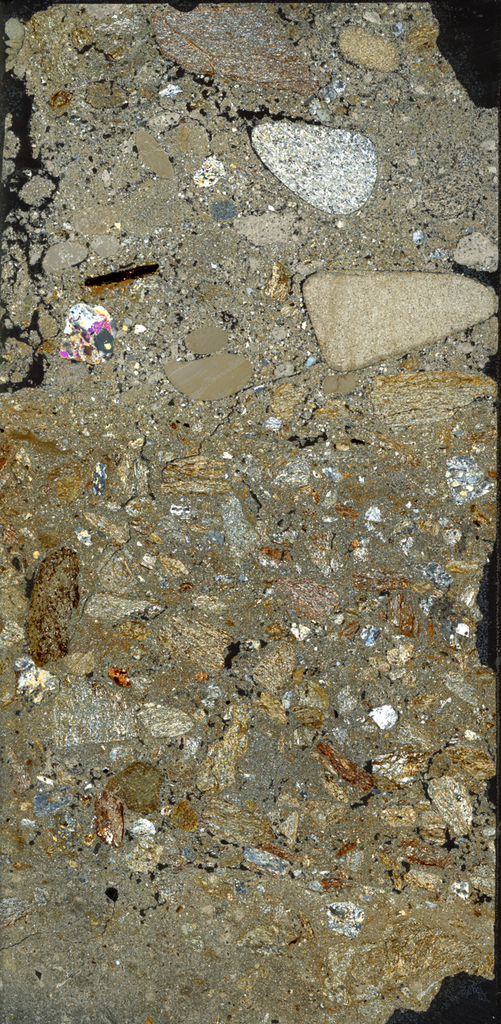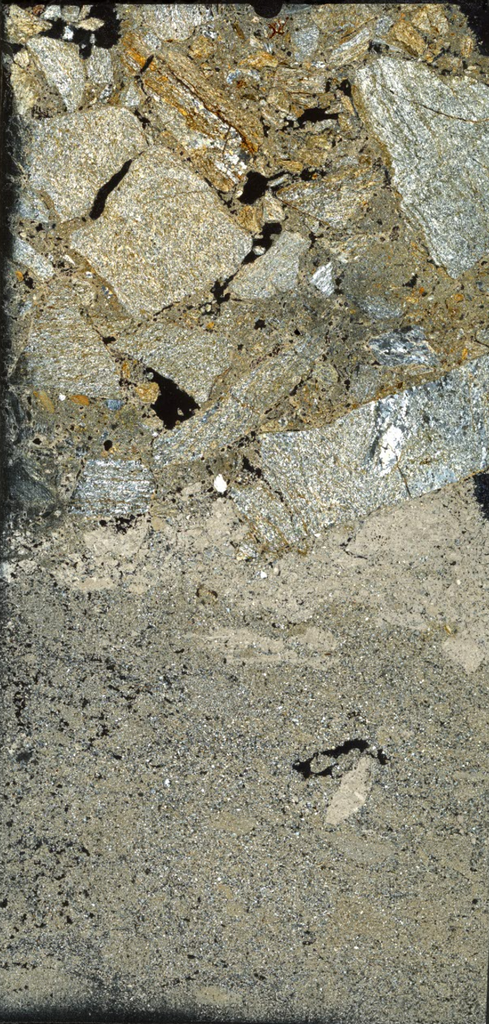
Sabrina Save just delivered the micromorphology analysis of two mammoth thin sections from Gallo-Roman floor sequences discovered in Sainte-Colombe (France), in the Rhône valley.
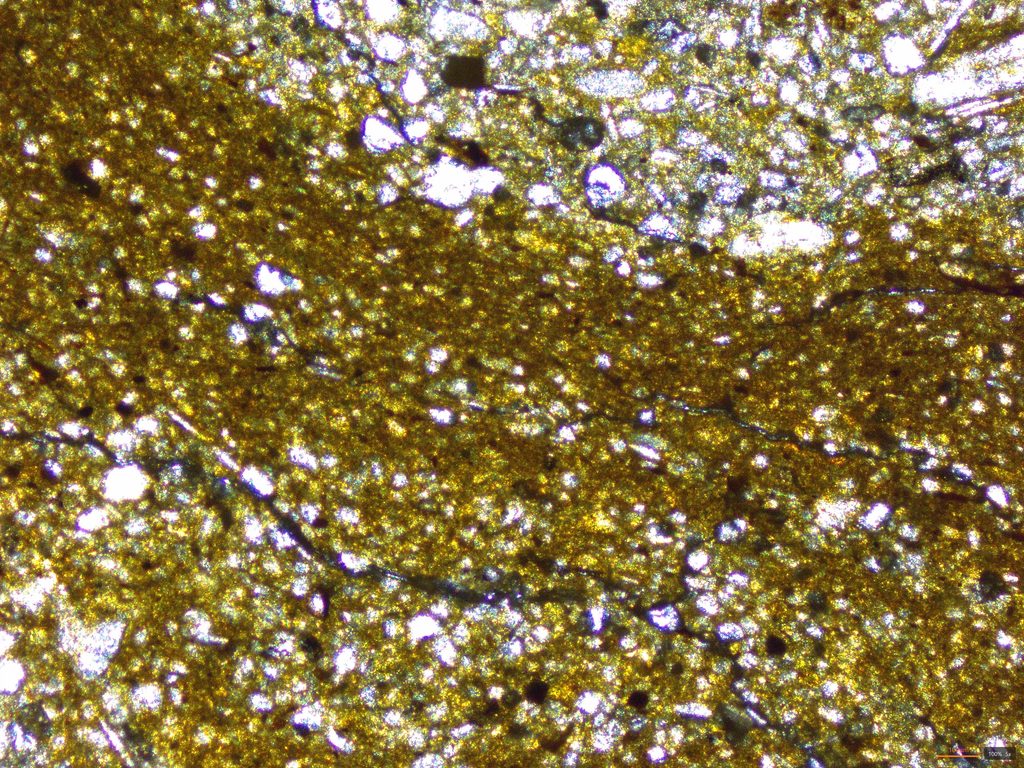
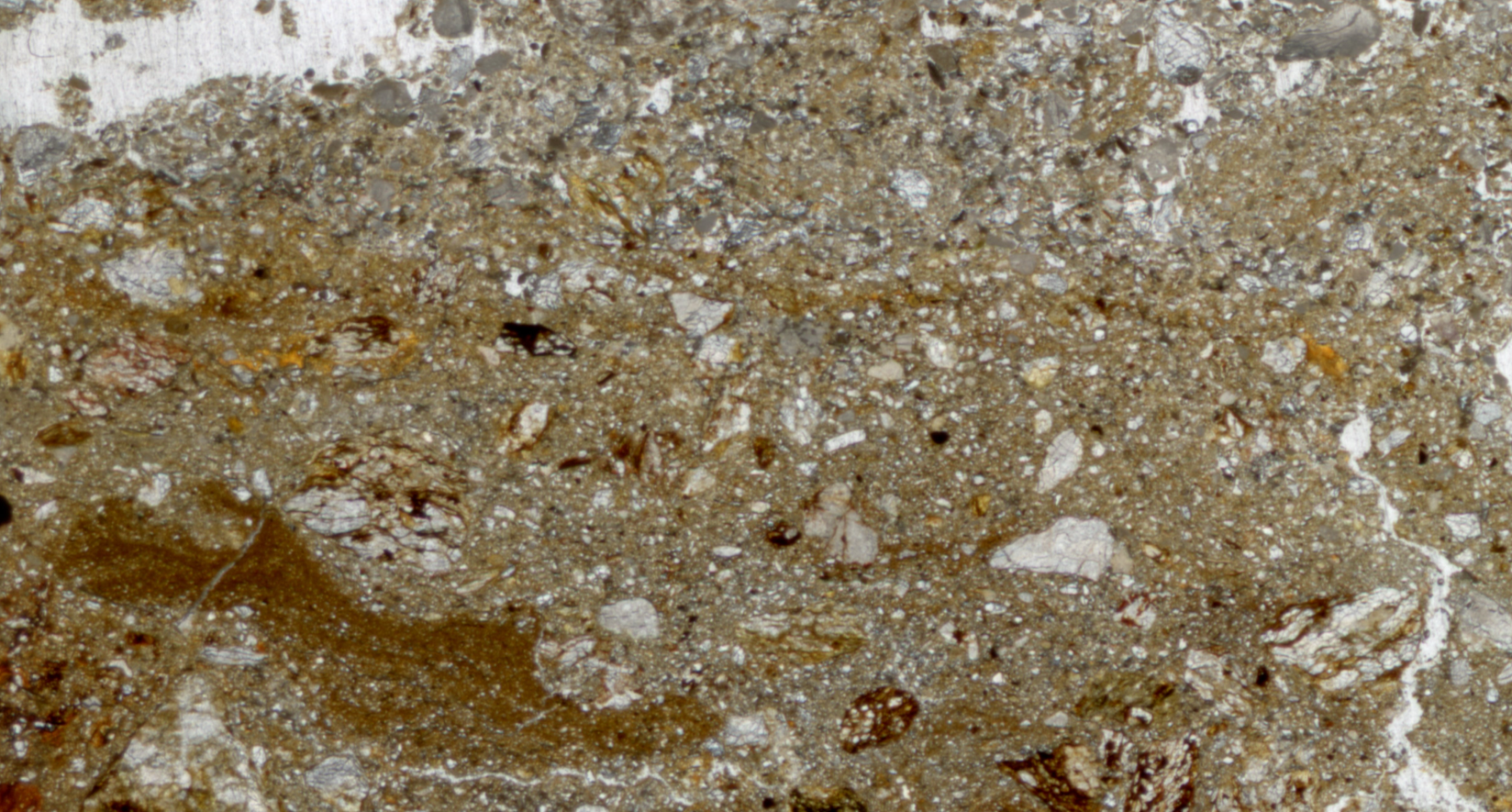
One slide revealed alluvial deposits from the Rhône, disturbed, mixed with calcareous fragments and trampled, illustrating the first development phase of the city on the riverside. The second slide presents two distinct floor sequences. A first adobe floor was built up with care. We observe evidence of maintenance, with the infill of a local depression in the surface, compacted with rock fragments and silts. The second floor covering the first is built with a complete different technique. The general level of the surface is raised of several centimeters with a sediment composed of well sorted rock fragments of a small size in a silty sediment matrix. The floor is highly compacted and we can observe trampling features on its surface with the formation of a bedded crust.
The sediment sequence did not deliver a lot of informations on human activities in the area. The only evidences, except the construction of the floors and trampling, are micro-charcoals and fragments of calcareous stone (unburnt). This new micromorphology investigation will contribute to the general understanding of history and evolution of this area of Sainte-Colombe.