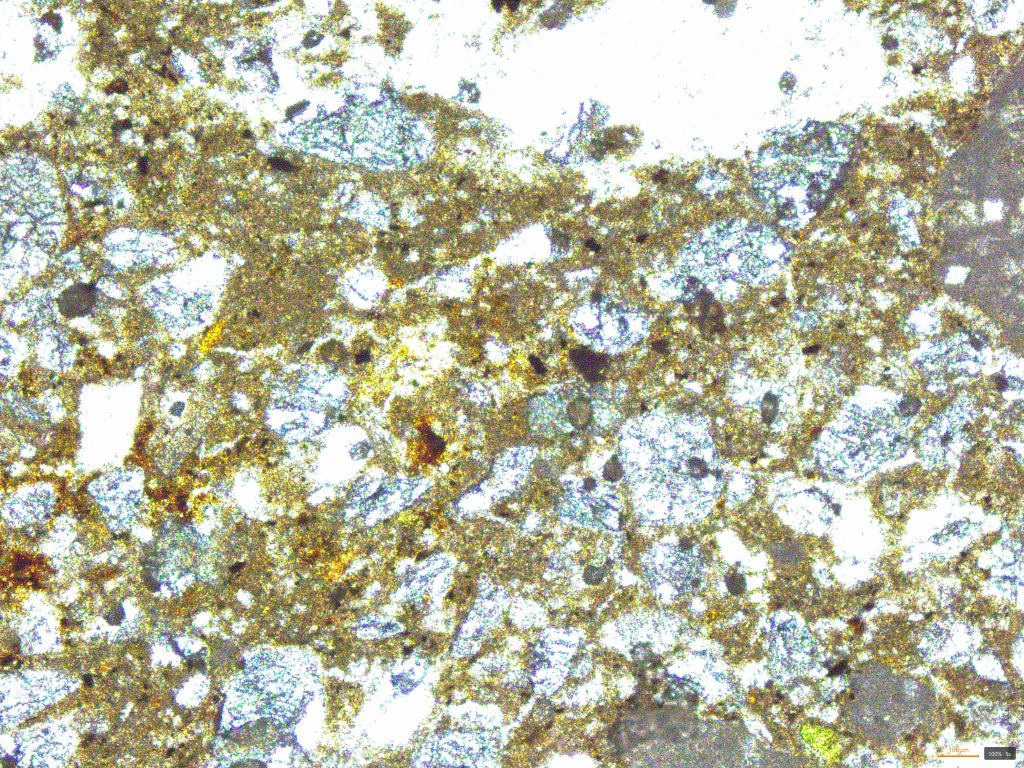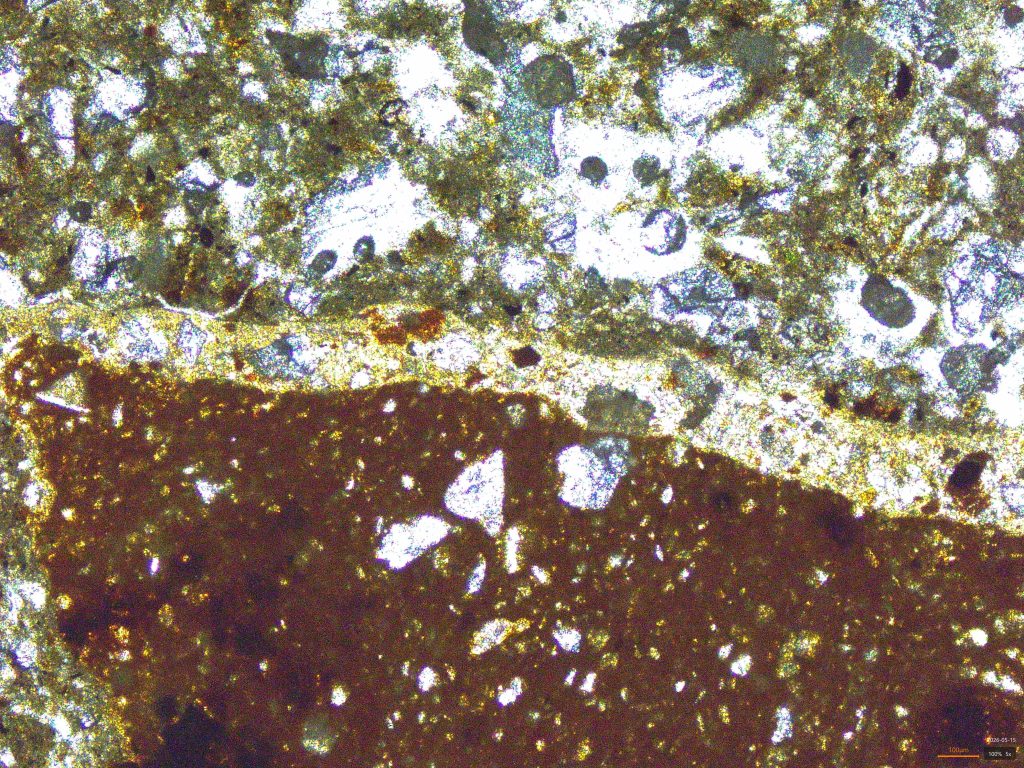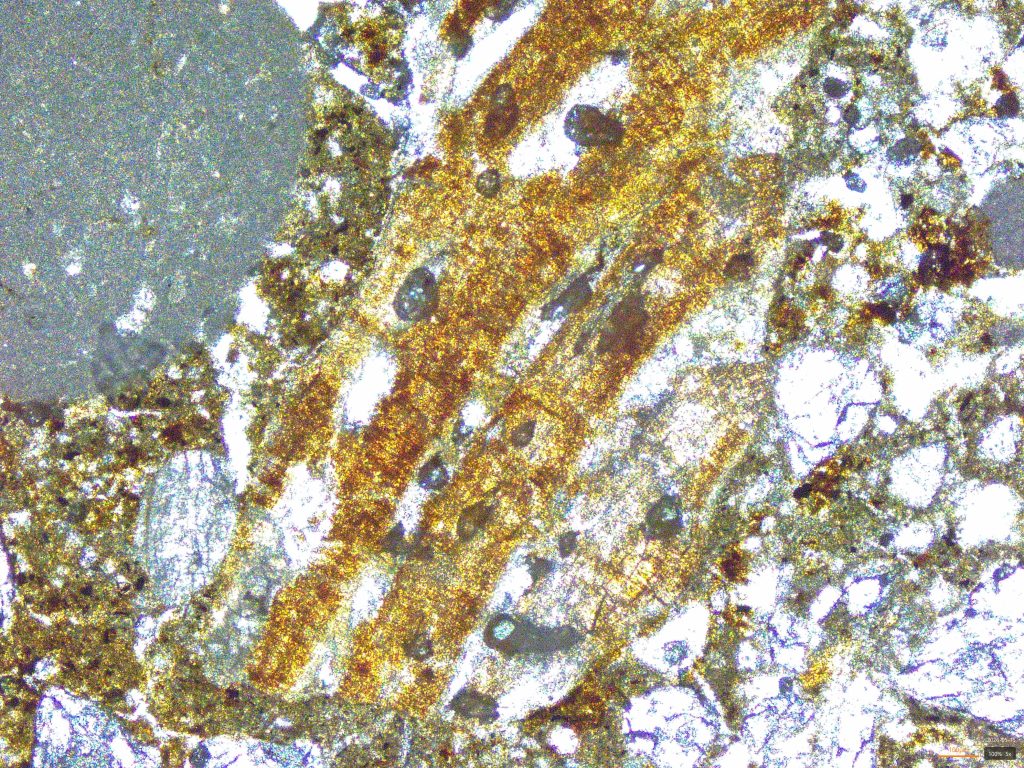
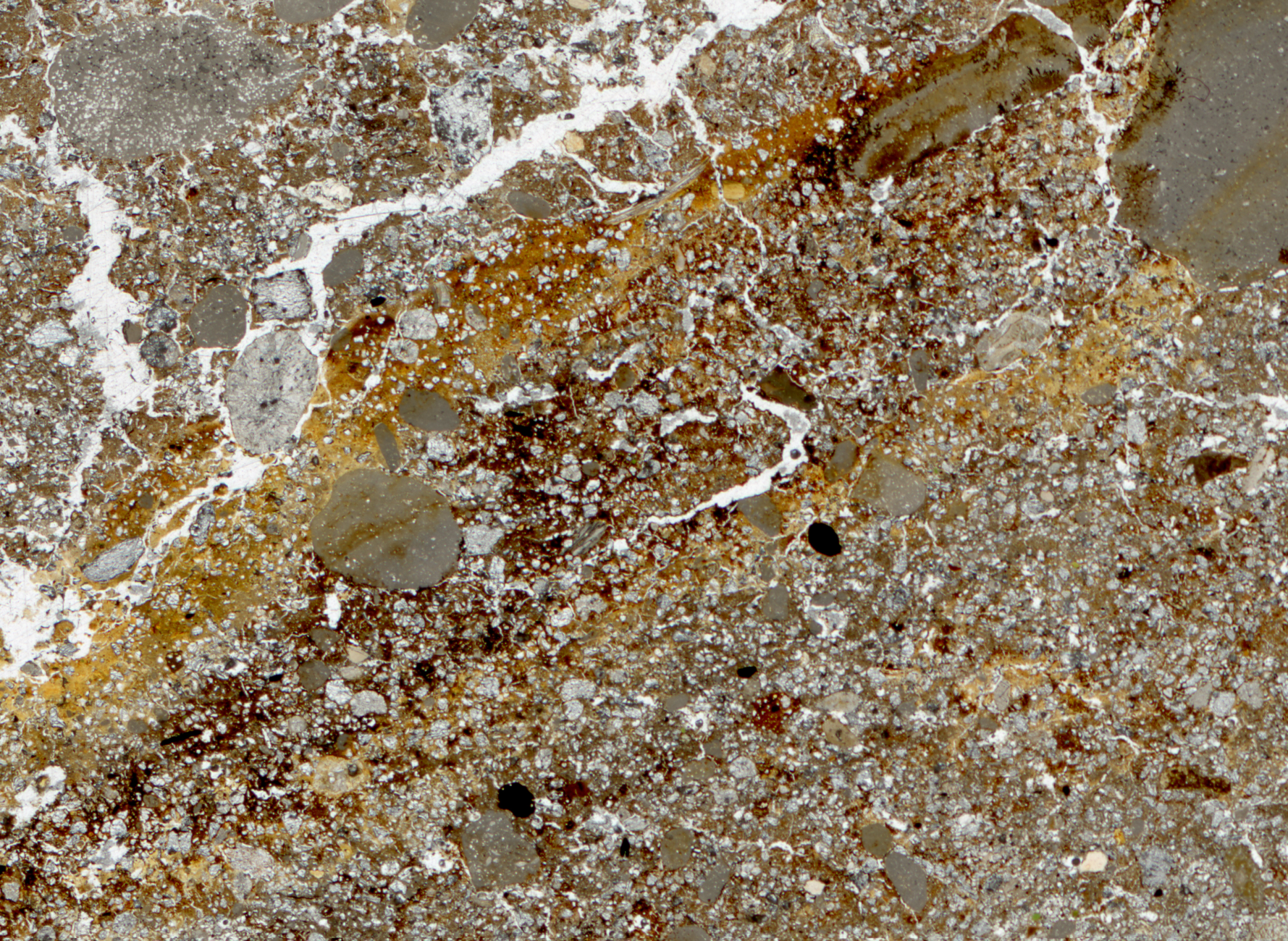
Sabrina Save has just completed a new micromorphology study on some urban stratigraphical sequences from Compiègne, northern France. Two sequences were sampled and processed into micromorphological thin sections at Terrascope. The two mammoth slides produced were analysed to investigate the Medieval gardens context, the development of a trackway at the surface of the garden, and the depositional processes of the levelling material covering the trackway.
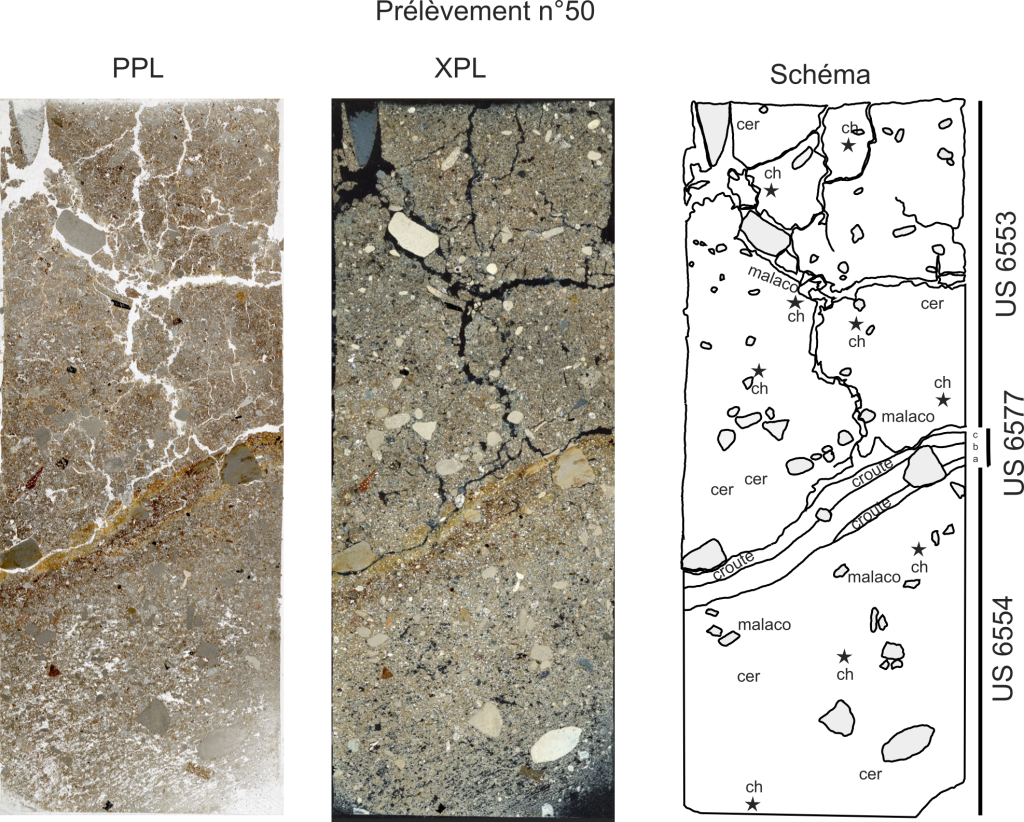
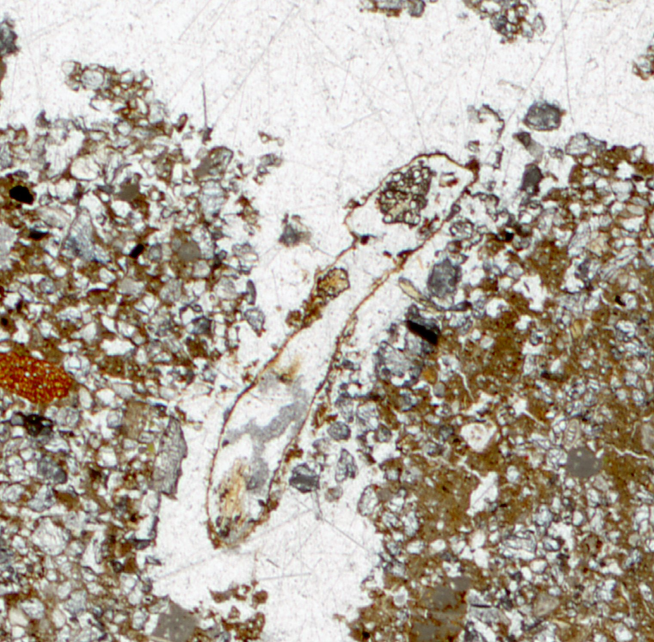
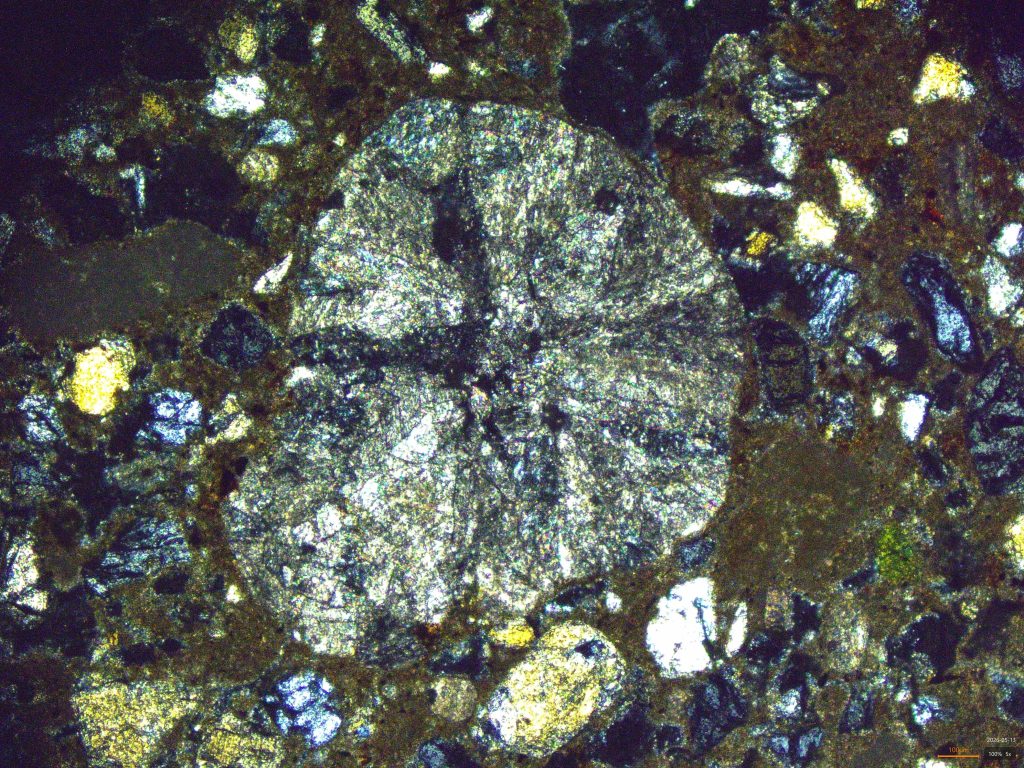
The garden context clearly exhibits evidence of biological activities, with roots preserved in root channels, calcitic biospheroids (earthworm activity), amorphous organic matter, and calcified plant fragments. No sign of proper cultivation was observed on the sequence.
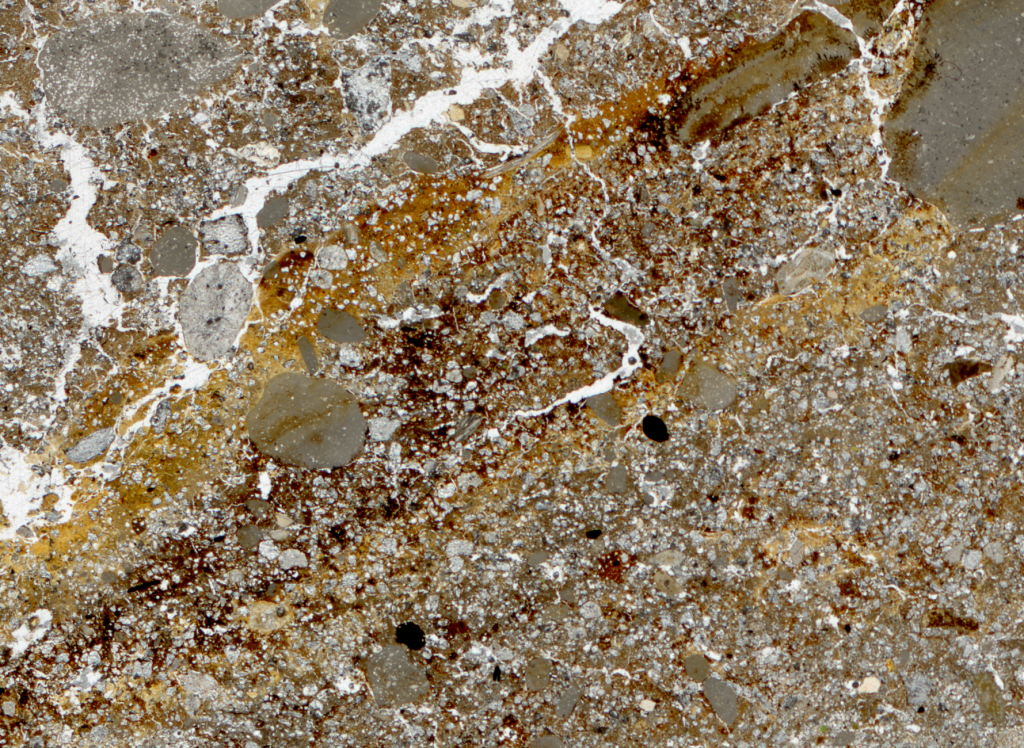
The trackway developped in three phases with first, the formation of a clayey crust at the surface, evidencing muddy conditions. The crust is covered by a thick layer (1 cm) of amorphous organic matter mixed with silt. The nature of this organic matter could not be determined but it does not seem to be dung. This organic deposit was really damp, impregnating and coating the surface of all the inclusions in organic matter. The deposit then dried out and contracted, creating dessication cracks, and a new clayey crust formed at its surface. This crust clearly exhibits trampling features: bedding with laminations of clay and organic matter, and orientation of particules parallel to the surface. No evidence of specific human activity in situ were observed on these trampled surfaces.
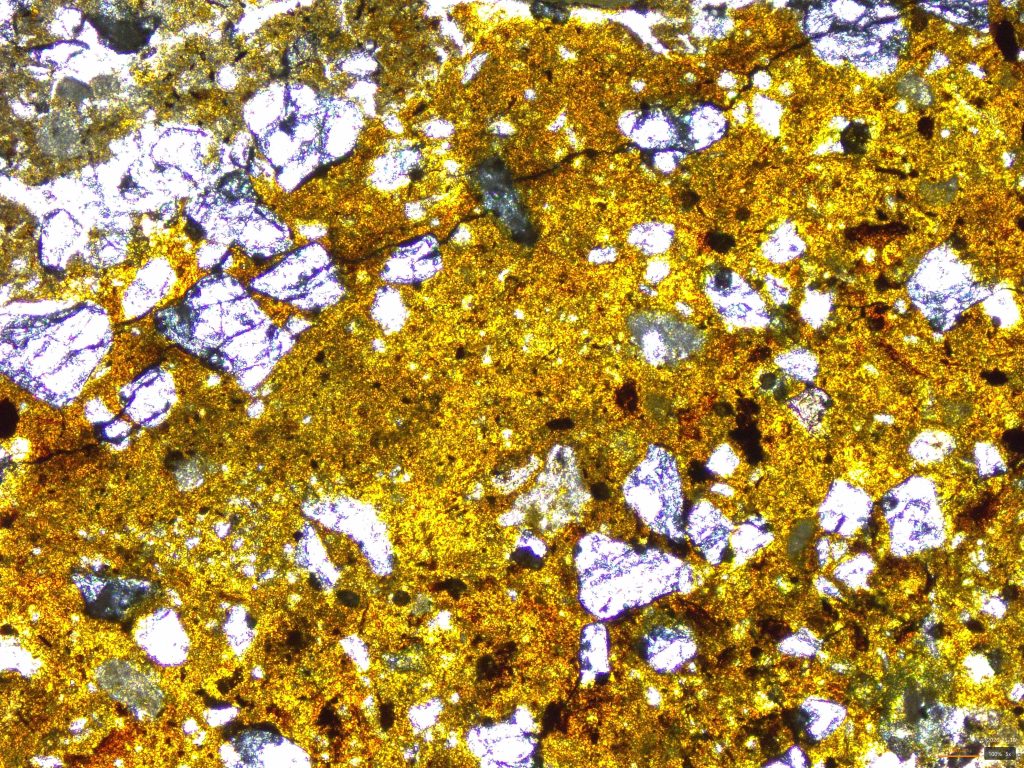
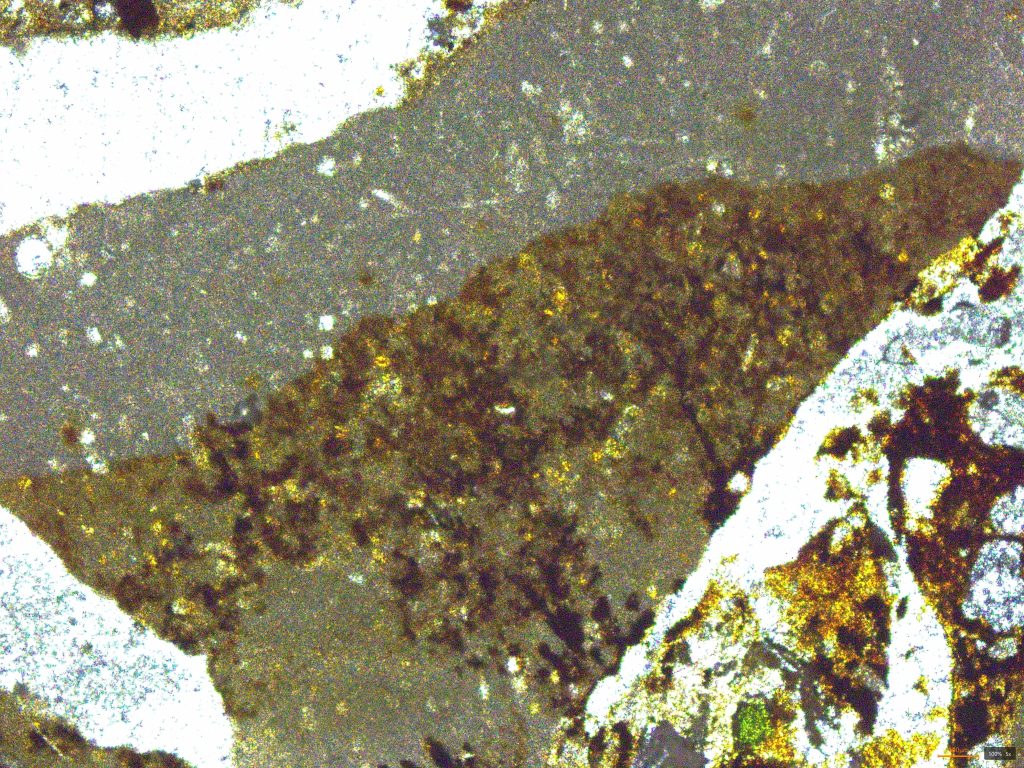
Subsequently the site is covered with leveling material: some homogenous calcitic silt containing bits of charcoals, ceramic, faune and molluscs. No sign of compaction was observed on the thin sections.